
Pigment Load vs. Reflect Direction: Balancing Neutral Base and Cool Tones on Porous Hair
Pigment Load vs. Reflect Direction: Balancing Neutral Base and Cool Tones on Porous Hair
Formulating hair color for highly porous hair requires a precise understanding of dye chemistry, cuticle absorption, and fiber structure. Porous hair whether caused by past chemical treatments, mechanical friction, or environmental exposure lacks a uniform cuticle shield and an intact cortex. When applying oxidative or semi-permanent color to porous strands, traditional formulation rules change: cold tones grab aggressively, warm undertones wash out quickly, and the final color can turn out uneven, overly dark, or hollow.
Mastering the balance between pigment load (depth and quantity of color) and reflect direction (primary and secondary tonal nuances) ensures even distribution and true-to-tone color results on compromised hair.
The Physical Behavior of Porous Hair Fiber
Hair porosity directly alters how color molecules enter, bind, and settle inside the cortex:
-
Cuticle Gaps and High Absorption Rate: Lifted or missing cuticle scales allow color precursors to flood the cortex rapidly, leading to instantaneous over-saturation.
-
Loss of Natural Warmth: Highly porous hair often lacks sufficient underlying natural pigment (pheomelanin and eumelanin) to anchor cold dyes, resulting in muddy, slate-grey, or greenish casts.
-
Uneven Charge Distribution: Chemical damage increases negative surface charges along the fiber, attracting positively charged cool dye molecules while repelling warm dyes.
Pigment Load vs. Reflect Direction: Key Differences
Understanding how pigment load interacts with reflect direction is critical when formulating for compromised fiber:
-
Pigment Load (Depth and Opacity): Refers to the concentration of fundamental dye intermediates (natural base tones) present in a shade. A strong natural base provides background fill, replacing missing warmth and structural depth.
-
Reflect Direction (Tonal Nuance): Represents the primary and secondary undertones (such as ash, violet, gold, or copper). Reflect direction creates visible tone, but without an adequate base load, cool reflect molecules will over-penetrate porous zones.
The Over-Toning Risk: Why Cool Tones Grab Darker
Applying a cool ash or violet shade directly to high-porosity ends often leads to unintended over-toning:
-
Molecule Size Variance: Cool dye molecules (especially blue and green reflects) are often smaller and more easily absorbed by open cortical sites than larger warm molecules.
-
Rapid Penetration: Without a neutral base to act as a buffer, blue and ash dyes fill open structural voids instantly, making the hair look two to three levels darker than intended.
-
Hollow Appearance: Excessive reflect without base pigment creates a flat, matte finish that lacks light reflection and natural dimensional sheen.
Formulation Strategy: Achieving Balanced Tone and Longevity
To deliver even depth and rich, radiant tone across varying porosity levels, follow these core formulation rules:
-
Incorporate a Neutral Base: Always blend your desired reflect shade with a neutral or gold-leaning natural base (N, NB, or G series). For high-porosity hair, a ratio of 50 percent natural base to 50 percent reflect shade prevents cool over-saturation while building lasting depth.
-
Pre-Pigmentation and Fillers: On extreme porosity cases (Level 8 and lighter), perform a pre-pigmentation or filling service before final color application. Reintroducing missing warm background pigments (yellow, gold, or copper) creates a stable anchor for cool reflects.
-
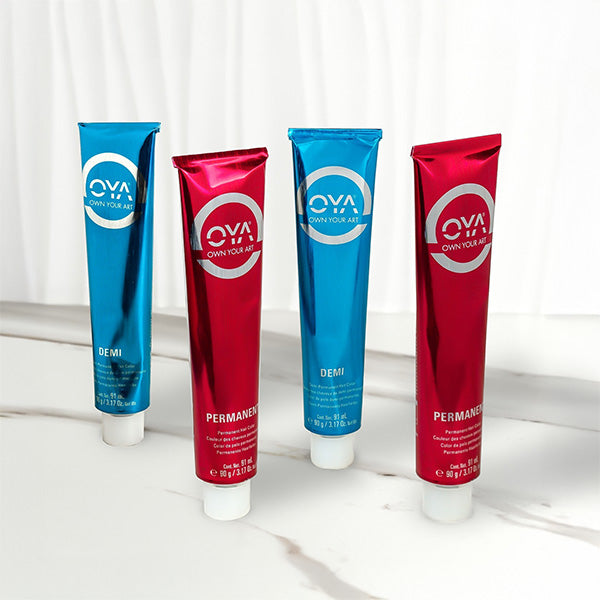
Lower Developer Strength: Use low-volume developers (5 Vol to 10 Vol) or acidic demi-permanent formulas. Acidic color seals the cuticle during processing, preventing dye over-penetration and reducing further structural damage.
-
Porosity Equalizers: Apply a spray-on porosity equalizer or protein spray before color application. These treatments fill microscopic gaps along the cuticle wall, ensuring uniform absorption from root to end.
By correctly balancing pigment load with reflect direction, colorists can overcome porosity challenges and achieve vibrant, predictable, and long-lasting color results.